

FULL REMODELING & CUSTOM DESIGN
Flooring Installation in South Florida
The surface you walk on every day.
What flooring installation with LIVARK involves
LIVARK handles new floors across Miami-Dade, Broward and Palm Beach, through the whole house or one room at a time: choosing the material, taking up the old floor, preparing the slab and the install. It starts with a 30-minute call about the rooms and how you use them.
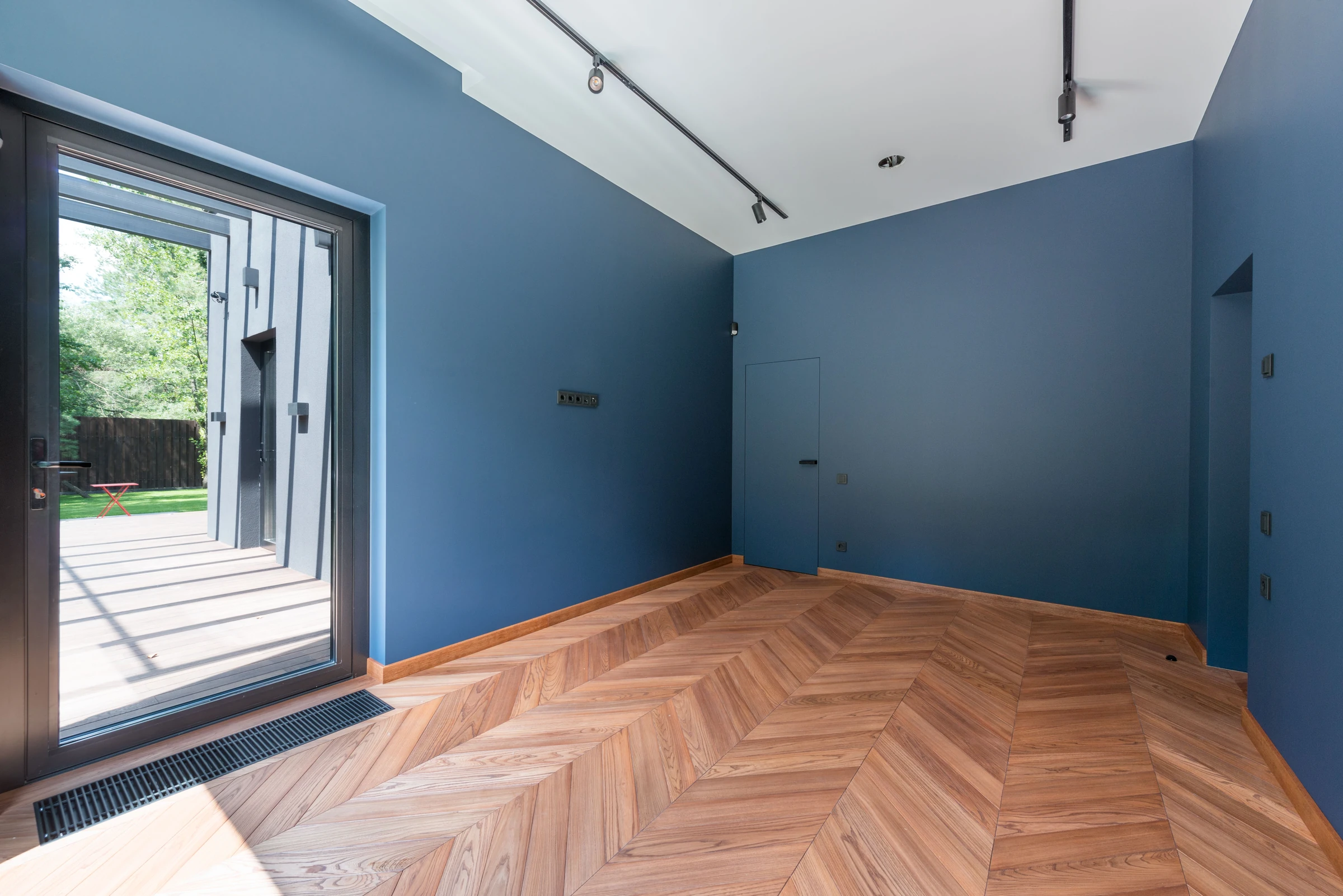
What’s included in LIVARK flooring installation
Material selection
Tile, vinyl or wood, chosen for the room, the slab and the humidity.
Slab preparation and leveling
Moisture testing and leveling so the new floor goes down flat and stays put.
Installation
Laid out so the pattern lines up from room to room and at every doorway.
Removal of old flooring
Old tile, carpet or wood taken up, and the old adhesive cleaned off the slab.
Baseboards and transitions
New baseboards and clean transitions where one floor meets another.
Stairs
Treads and risers finished to match the floor.
Which flooring holds up best in South Florida humidity
Most South Florida homes sit on a concrete slab, so how a floor handles moisture from below and humidity from the air matters more than how it looks on day one.
Porcelain tile. Close to impervious to water and humidity. It works anywhere in the house, including kitchens, bathrooms and covered patios, and wood-look porcelain gives the look of wood without the moisture risk.
Luxury vinyl plank. Waterproof, stable in humidity, and warmer and quieter underfoot than tile. Standard laminate is only water-resistant and can swell at the seams in a humid kitchen or bath.
Engineered wood. A real wood surface over a layered core, which handles a slab and humidity far better than solid wood.
Solid wood. Moves with humidity, and is the riskiest choice over a slab in this climate.
We help you weigh looks, feel, upkeep and budget for each room, so the floor you choose is one that lasts here.
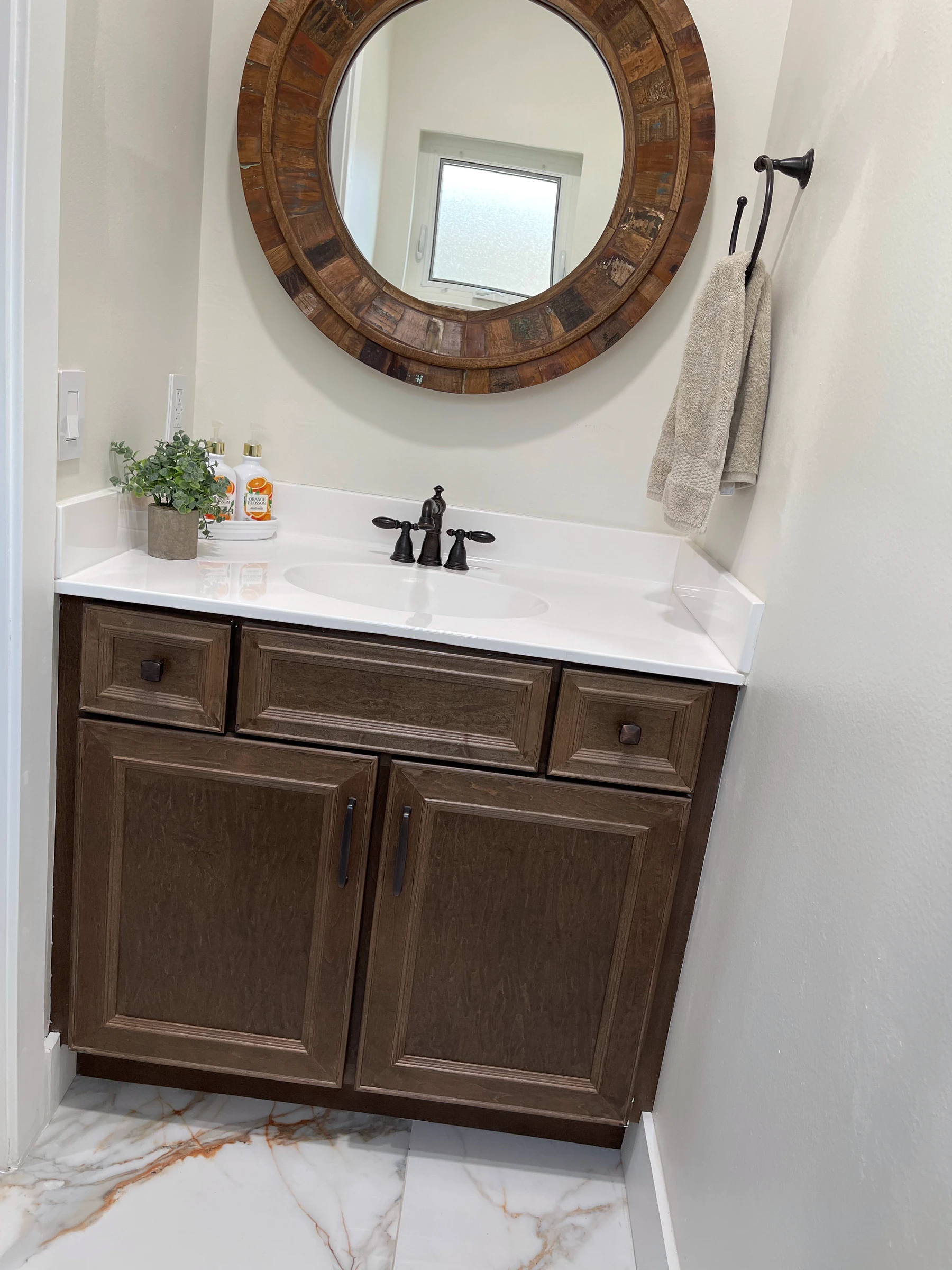
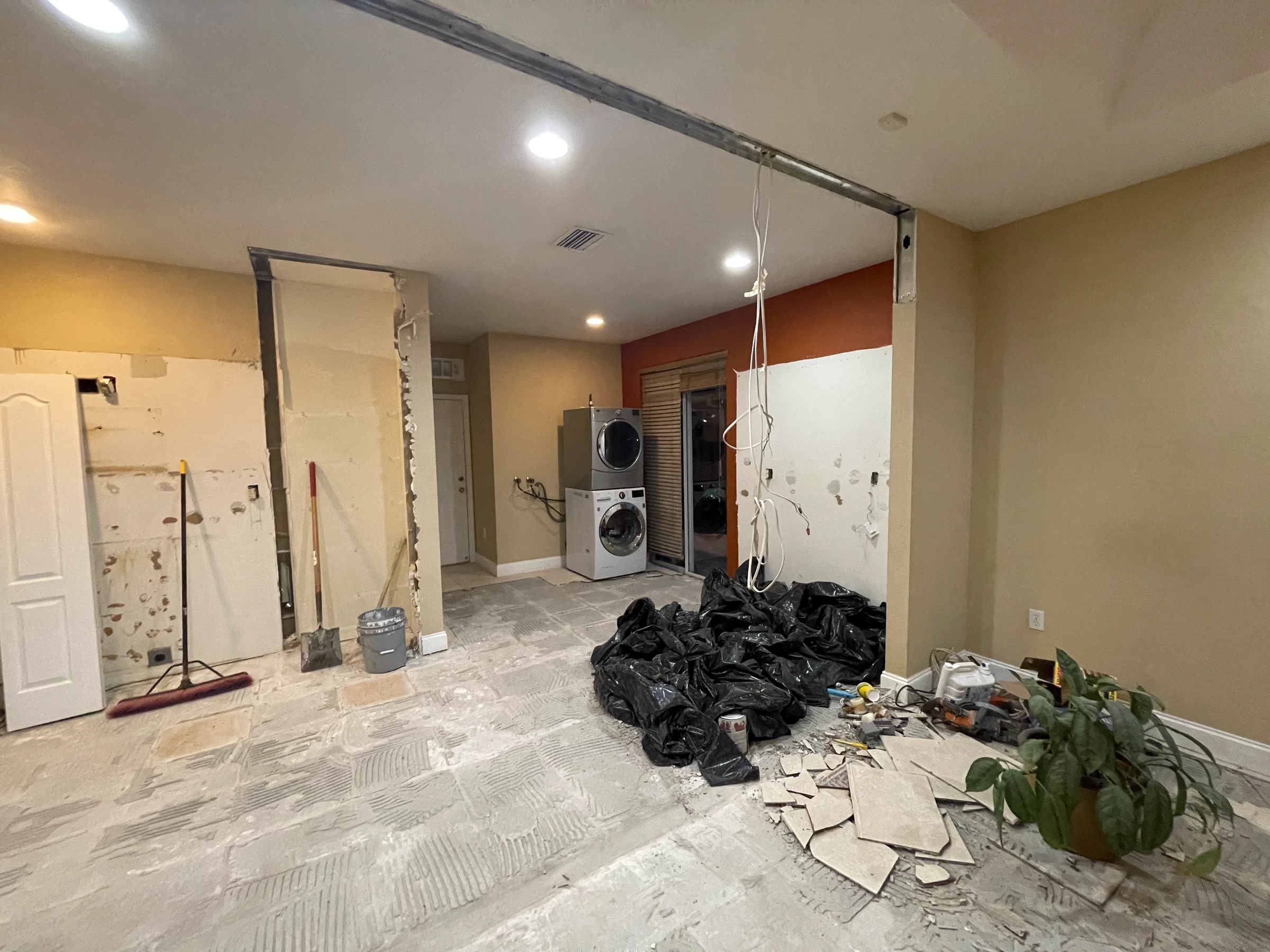
Concrete slabs and moisture: what happens before the floor goes down
A concrete slab can feel dry on top and still hold moisture inside. Before a new floor goes down, the slab has to be dry enough and flat enough for the material.
Moisture testing. The two standard tests are ASTM F2170, which measures humidity inside the slab with probes, and ASTM F1869, which measures how much moisture comes off the surface. Flooring manufacturers set limits, and many require documented testing to honor their warranty.
Leveling. High spots are ground down and low spots filled with a leveling compound, so planks don’t flex and large tiles don’t crack or sit uneven at the edges.
Why it matters. Moisture from the slab is a common cause of failed adhesive, cupped wood and lifting floors. Testing costs little compared with a floor that has to come up.
Terrazzo under the old floor: what to know
Many mid-century South Florida homes were built with terrazzo floors, and a lot of that terrazzo is still there, covered by carpet, tile or wood.
Finding it. Lifting a corner of carpet or a loose tile often shows what’s underneath. Taking up old tile can chip the terrazzo below, so it’s worth knowing before demolition starts.
Restoring it. Terrazzo can be ground and polished back to a finish close to the original, and chips and cracks can be filled.
Covering it. It can also go under a new floor once the surface is prepared.
Either way, it’s a decision to make before the old floor comes up.
What drives the cost of new flooring
The material is only part of the price of a new floor. Four other things move it.
Removing the old floor. Carpet comes up quickly. Tile set in mortar takes more work, and old adhesive has to be cleaned off before anything new goes down.
Slab preparation. Moisture testing, grinding and leveling depend on the condition of the slab.
Layout and pattern. Large tiles, herringbone and diagonal layouts take more time and more cuts than a straight lay.
Transitions and trim. Doorways, stairs, baseboards and the places where two floors meet all add detail.
Before any work starts, you get a written scope and a price, so you know the number before the old floor comes up.
How a flooring project runs, step by step
Four steps, from choosing the floor to the final walkthrough.
1. Planning
We walk through the rooms with you, measure, and talk through how you use them and your budget.
2. Selections
You choose the material, the color and the layout, with samples seen in your own light.
3. Preparation
The old floor comes up, and the slab is tested, cleaned and leveled.
4. Installation
The new floor goes down with baseboards and transitions, and we walk through it with you at the end.
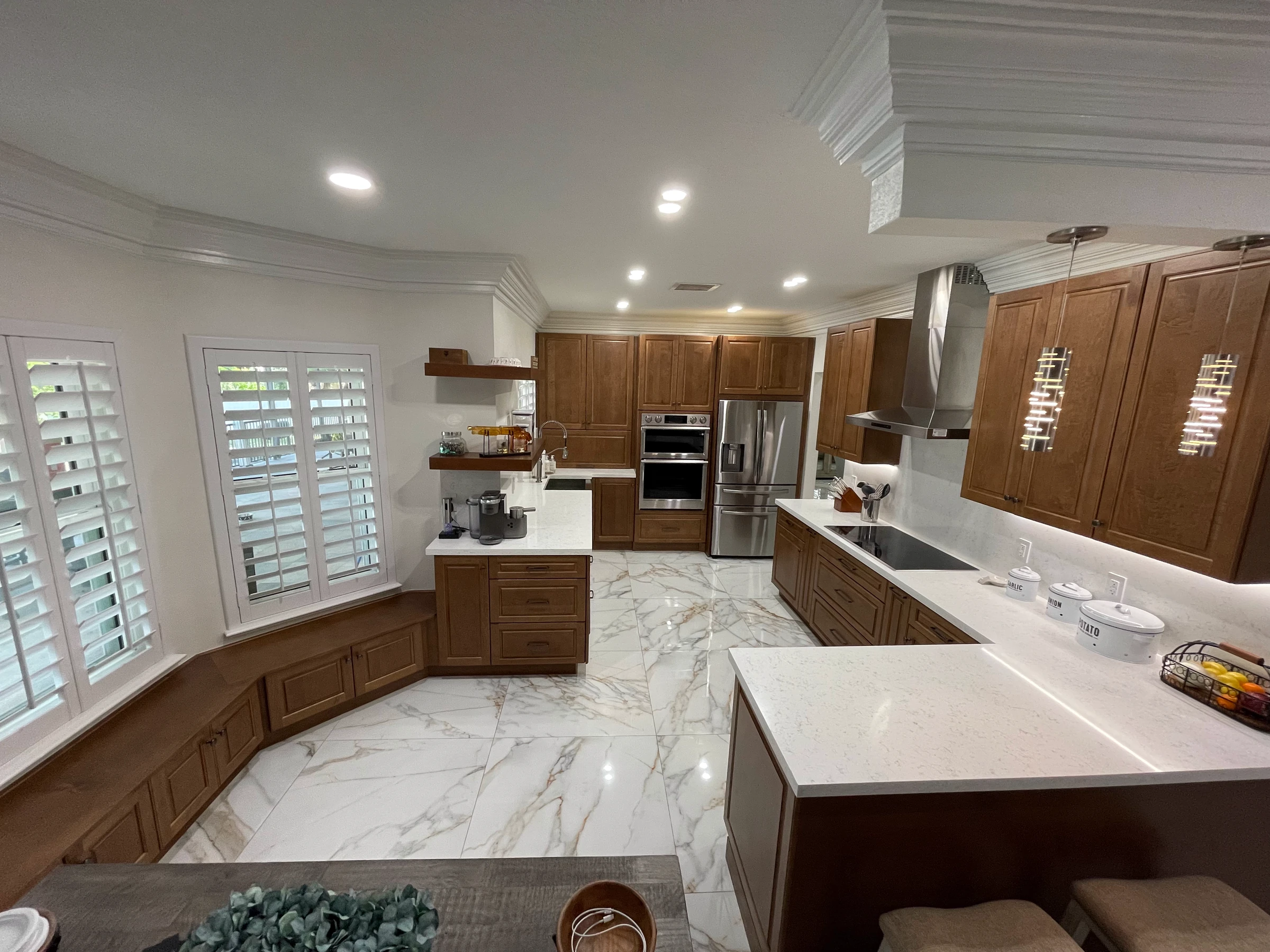
COMMON QUESTIONS
Flooring questions
What is the best flooring for a humid South Florida home?
Porcelain tile and luxury vinyl plank both handle humidity and a concrete slab well. Engineered wood works with the right slab preparation. Solid wood is the riskiest choice over a slab.
Can new flooring go over my old tile?
Sometimes, if the tile is flat, sound and well bonded, and the added height works at doors and transitions. Often the better result comes from taking it up.
Why test a concrete slab for moisture?
Because a slab can look dry and still hold moisture that breaks down adhesive and warps wood. Many flooring manufacturers require documented testing to keep their warranty valid.
Do I need a permit for new floors?
Often not. Unincorporated Miami-Dade, for example, exempts floor surfacing in homes of up to four units. Rules vary by city, so check with yours.
Are you licensed and insured?
Yes. LIVARK is a Florida Certified General Contractor, license CGC1538621, and is insured. You can verify the license at MyFloridaLicense.com. We’re also a member of the National Kitchen & Bath Association (NKBA).
Which areas do you serve?
South Florida: Miami-Dade, Broward and Palm Beach.
Tell us about your project.
Book a call, call us, or send a message. Whichever is easiest for you.
Service area
South Florida: Miami-Dade, Broward, Palm Beach
What happens next
Someone from our team will get back to you to talk through the project and the next step.
Pick a time that works for you. We’ll call you.
Call (954) 835-4175
Mon–Fri, 9 am – 6 pm
Message us on WhatsApp
Send a message and photos of the space.
info@livarkconstructiongroup.com
For plans, drawings and documents.