
For cabinet boxes, plywood generally handles moisture better than particleboard, which swells when it gets wet and doesn’t fully shrink back. Painted MDF doors hold up when they’re sealed on every side, and finishes cured at the factory tend to outlast finishes applied on site. Near the coast, 316 stainless steel or solid brass hardware is the safer choice. The house matters as much as the cabinet: keep indoor humidity below 60%, vent the kitchen and bathrooms to the outside, and keep the sink base dry.
How humid does it get inside a South Florida home?
Outside, the air is humid all year. Miami averages about 82% relative humidity in the morning and 61% in the afternoon, according to the Florida Climate Center.
Inside is what cabinets respond to. The EPA recommends keeping indoor relative humidity below 60%, ideally between 30% and 50%. One cabinet manufacturer’s care guide recommends 30% to 55% and warns that homes in coastal or very humid areas can reach 70% to 80% indoors, enough to make cabinet joints swell.
Air conditioning dries the air as it cools it, so a properly sized system, left running, does most of the work of keeping a South Florida house in range. Problems tend to show up when the AC is off or set high for long stretches, or in a room that stays closed.
Cabinet boxes: plywood or particleboard?
Wood and every panel made from wood take on moisture from the air and give it back, swelling as they get damp and shrinking as they dry. The box is the part you mostly don’t see: the sides, bottom, back and shelves. Most boxes are plywood or particleboard, sometimes MDF, and all of them are widely used.
They behave differently once they get wet. The Composite Panel Association, the industry group for these panels, says particleboard and MDF swell more than solid wood in high humidity or water, and that the swelling isn’t fully reversed when the panel dries. A slow leak under a sink can leave the cabinet floor swollen for good.
Plywood moves with moisture too, but its thin layers are glued with the grain running in alternate directions, so each layer holds the next one in place. The U.S. Forest Products Laboratory describes that cross-layering as the reason plywood is stable. Plywood also holds screws better than particleboard, which matters for hinges.
Plywood matters most in the cabinets that get wet: the sink base, the cabinets on either side of the dishwasher, and bathroom vanities. In drier spots such as a pantry or a closet, particleboard is widely used. If it is, look for panels covered the same way on both sides; the panel association notes they warp less than panels covered on one side only.
Doors: solid wood, MDF or thermofoil?
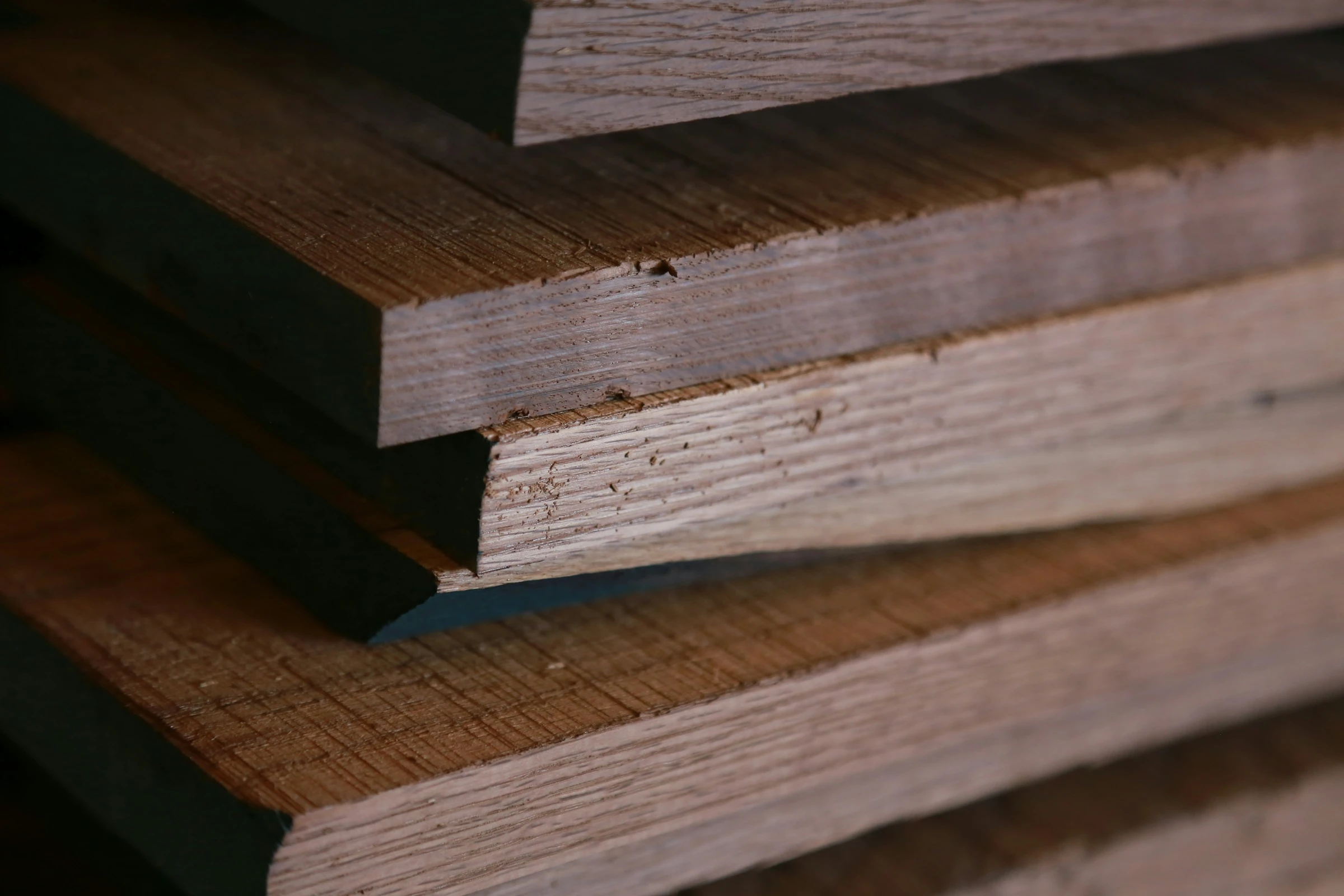
Solid wood doors move with the seasons. Panels can shrink and swell, mitered corners can open slightly, and the frame pieces can bow. The manufacturer’s guide calls these reactions normal for wood cabinets. Keeping indoor humidity steady keeps the movement small.
Painted MDF is a common choice for painted doors. Its weak point is any face or edge left unsealed, where it takes up moisture and swells. Painted MDF doors should be finished on all six sides (front, back and all four edges), so steam from the dishwasher or the stove can’t get in.
Thermofoil is a vinyl skin pressed over MDF. It can peel or lift near heat: beside or above the oven, or above a toaster or coffee maker. Once it peels, the door usually has to be replaced. If you like the look, plan where it goes so it stays away from heat.
Which cabinet finishes last?
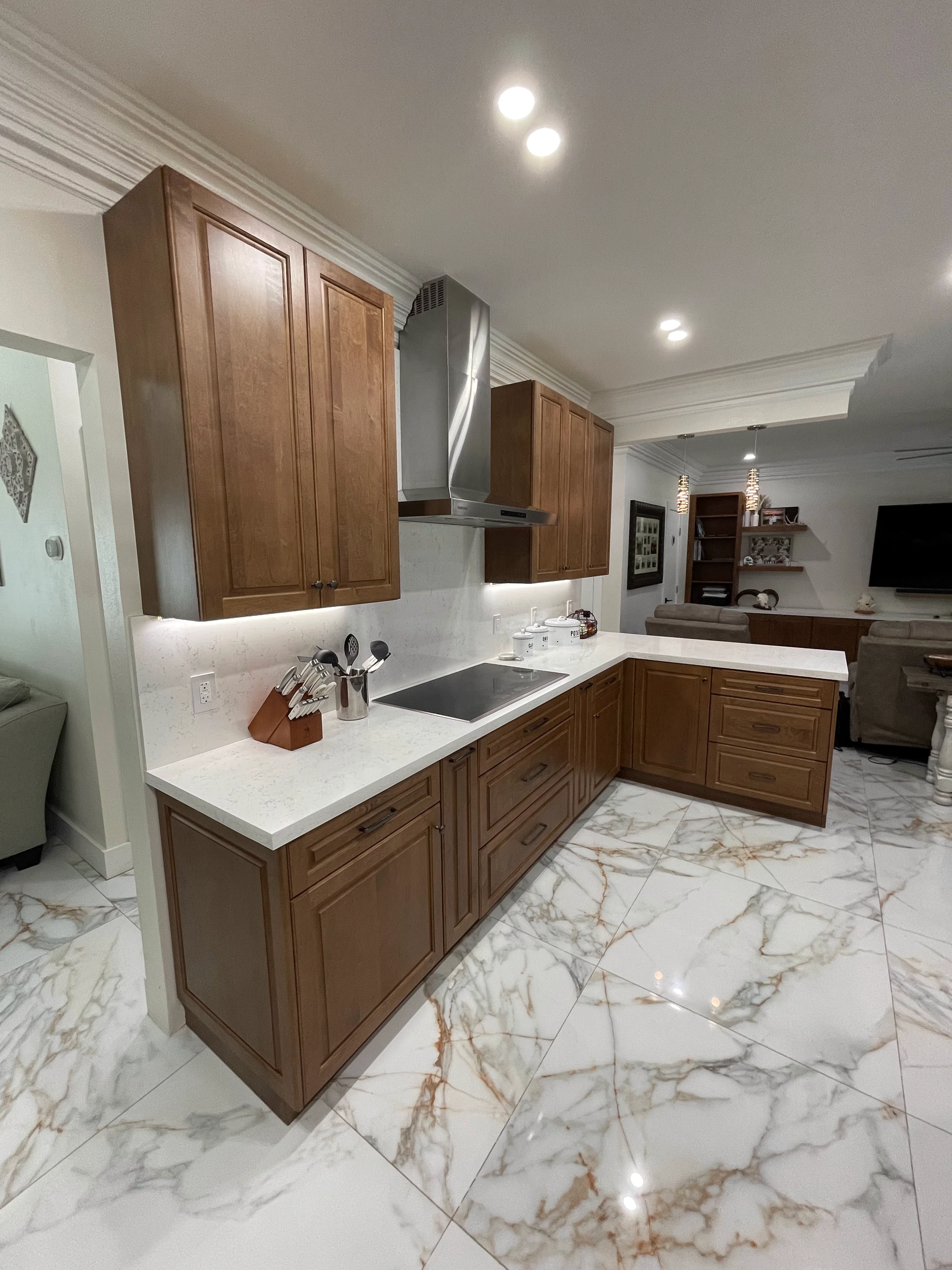
The finish keeps moisture out of the wood. Finishes cured at the factory, such as conversion varnish or catalyzed lacquer, generally hold up better than finishes brushed or sprayed on site, because the factory controls the conditions while they’re applied and cured. Whatever the finish, look closely at the edges and at the doors around the sink and dishwasher, since those see the most water.
The Kitchen Cabinet Manufacturers Association certifies cabinets to its A161.1 standard, which tests the structure, drawers, doors and finish “to simulate a lifetime of use.” Certified cabinets carry a seal, and you can look up certified companies on the association’s website.
What cabinet hardware holds up near the coast?
Salt air is hard on metal. Type 304 stainless is the common grade. Type 316 adds molybdenum, which improves its resistance to salt, and that’s why 316 is often called marine grade. The International Molybdenum Association reports that 316 does well at typical coastal sites, which it puts at up to about 10 miles from salt water, though even 316 can show light surface staining in harsher spots, such as right by the water. Those findings are for metal used outdoors; hardware indoors sees less salt.
Solid brass is the other common choice. It has no iron in it, so it doesn’t rust, although it darkens over time unless it’s coated. Plated hardware is different: a thin finish over another metal, which can corrode once the plating wears through.
When you choose hardware, ask what the hinges and drawer slides are made of as well as the pulls. They sit inside the cabinet, where damp air collects.
Where do cabinets take on water?
Most moisture damage starts in a few places:
- The sink base, from slow leaks at the supply lines and the drain.
- Beside the dishwasher, from steam when the door opens.
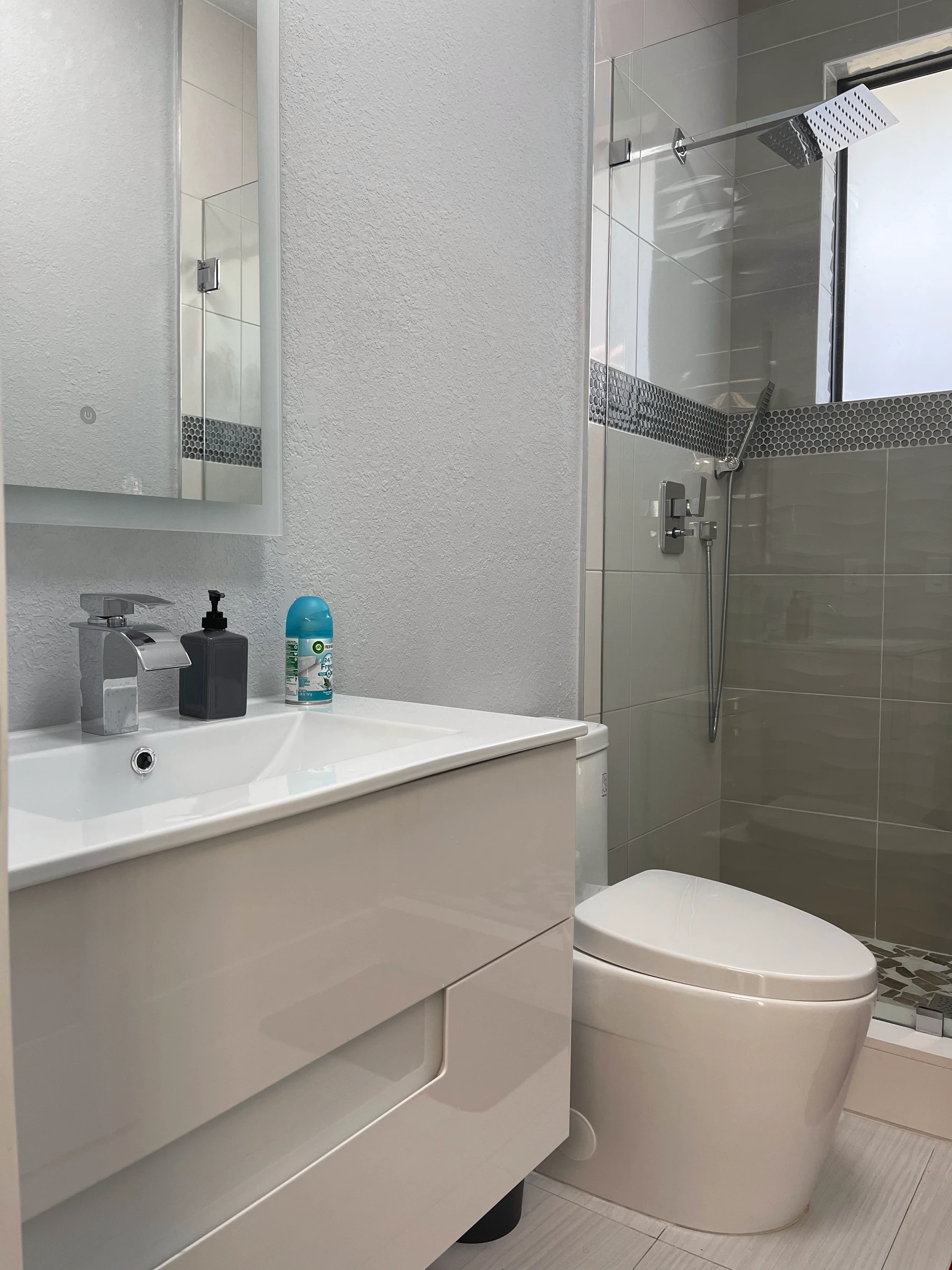
- Bathroom vanities, from shower steam and splashes.
- Next to the range or oven, where heat is hard on thermofoil and some finishes.
- Under a window, a window AC unit or an AC vent, where rain or condensation can drip in.
The EPA advises fixing plumbing leaks as soon as possible, and a sink base you can see into, with the pipes easy to reach, makes a leak easier to catch. Building codes require a bathroom to have a window that opens or an exhaust fan vented to the outside. The EPA advises running the bathroom fan or opening the window when you shower, and using a range hood vented outdoors when you cook. There’s more on bathroom planning on our bathroom remodeling page.
When should cabinets go in?
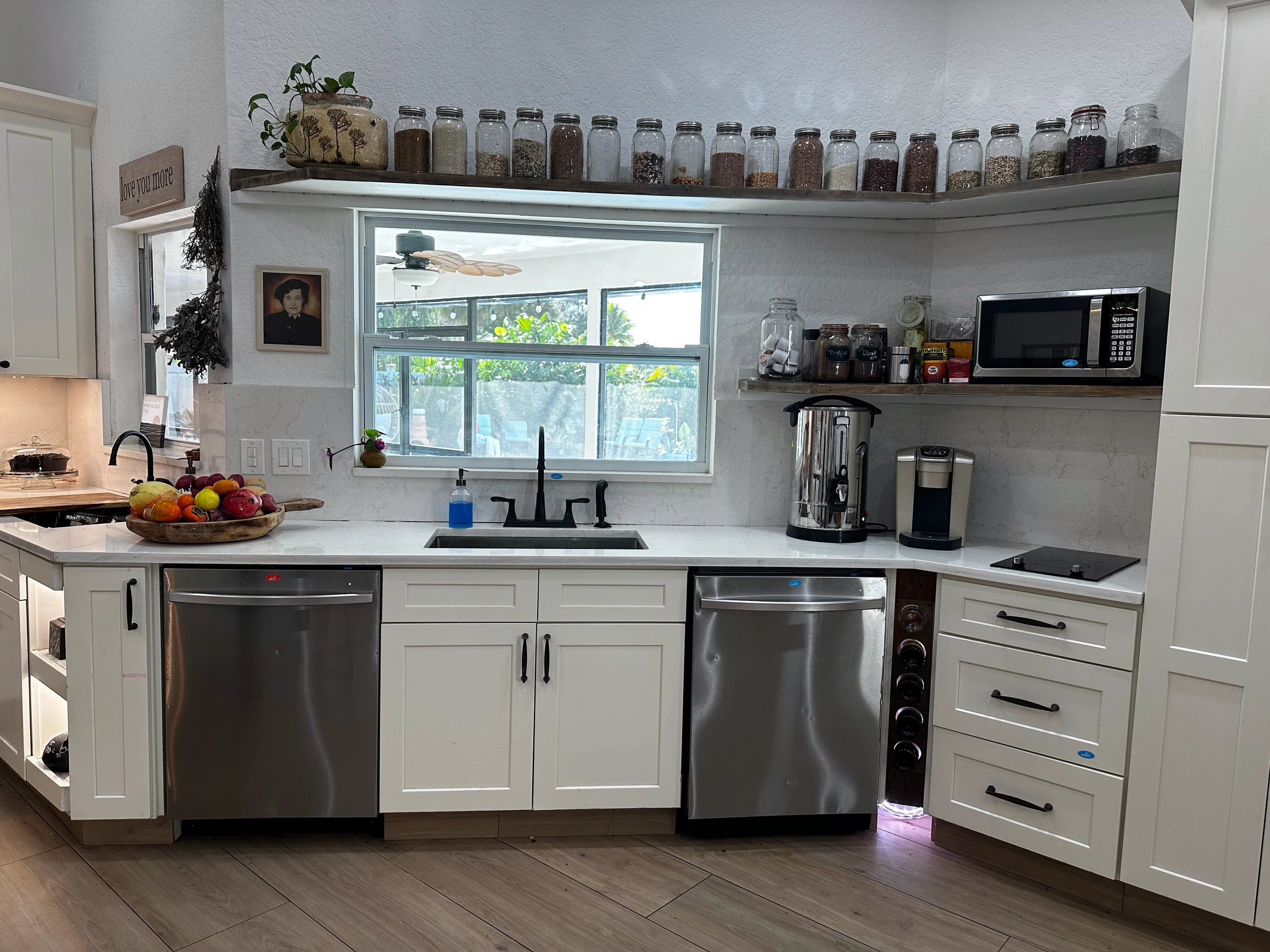
Cabinets hold up better when they’re installed in the conditions they’ll live in. The same care guide says to finish drywall, concrete and other work that adds moisture first, keep the heating and cooling running steadily, store the cabinets where temperature and humidity are controlled, and let them adjust to the room before they’re installed. In South Florida, that means the house is closed in and the air conditioning is on before the cabinets arrive. Ask about it when you plan the schedule. Our article on what to decide before your remodel starts covers the other early decisions, and kitchen remodeling covers the rest of the kitchen.
Leaving the house for the summer?
If you’re away for months, keep the humidity down while you’re gone. FPL’s advice to seasonal residents is to keep indoor humidity below 60%, with the air conditioning or a dehumidifier. An empty house with the AC off can turn damp, and the cabinets react: doors, drawers and joints swell.
A humidity-ready cabinet checklist
You can use this for any cabinet, from anyone:
- Plywood boxes at the sink base, beside the dishwasher and in bathroom vanities
- Painted MDF doors finished on all six sides
- Solid wood doors, with some seasonal movement expected
- Thermofoil kept away from the oven and other heat
- A finish cured at the factory, with the edges checked
- KCMA certification, if you want a standard you can look up
- 316 stainless or solid brass hardware near the coast, hinges and slides included
- A sink base you can see into, and leaks fixed right away
- A bathroom fan and range hood that vent outside
- Indoor humidity below 60%, including when you’re away
- The house closed in, dry and air-conditioned before the cabinets go in
When you’re ready to plan, see how we approach custom design and cabinetry.
Cabinet materials and finishes change, and new ones come along, so check the current specifications and warranty for any cabinet you choose. LIVARK, a Florida Certified General Contractor (CGC1538621) that designs custom cabinetry, can recommend what’s current for your home when you plan your cabinets.